ENTERPRISE TAXONOMY & DIGITAL EXPERIENCE
Connecting Content, Customers & Commerce
Building a scalable taxonomy and navigation framework to connect editorial coverage, audience discovery, and commercial opportunities.
The challenge: Connecting a fragmented experience
What began as an effort to bring more structure to advertising products tied to editorial coverage evolved into a broader opportunity to rethink how we organize and surface content across our digital platforms.
Our advertising offerings tied to editorial coverage lacked a consistent structure, making them difficult to package and scale. I brought together senior leaders across advertising, content, design, and the national newsroom to explore how we could establish core coverage categories that would support both commercial products and the broader digital experience.
As the conversations evolved, a bigger question emerged: Were we organizing our website around how our audiences actually wanted to discover content?
Step 1: Establishing a new framework
The conversation opened the door to reexamining our site navigation and underlying content taxonomy.
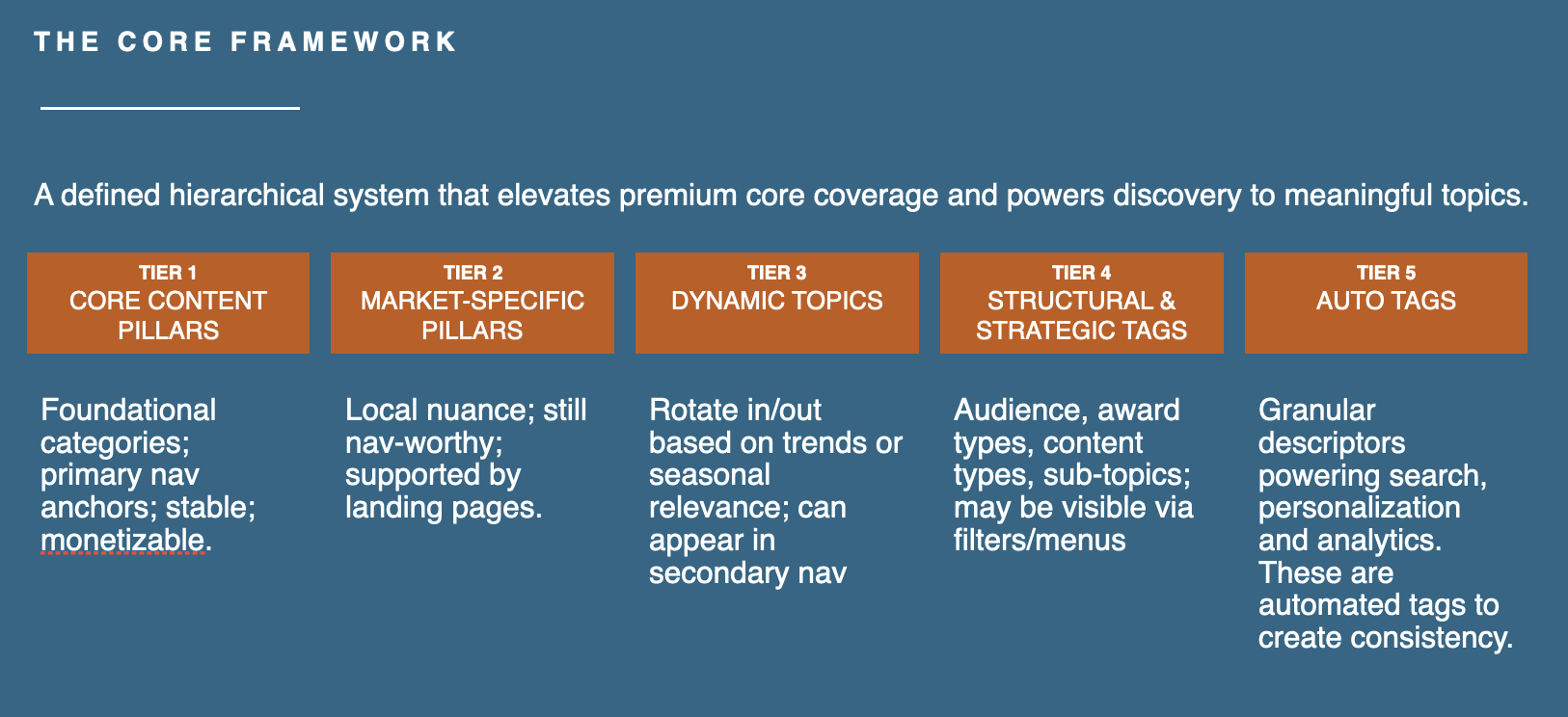
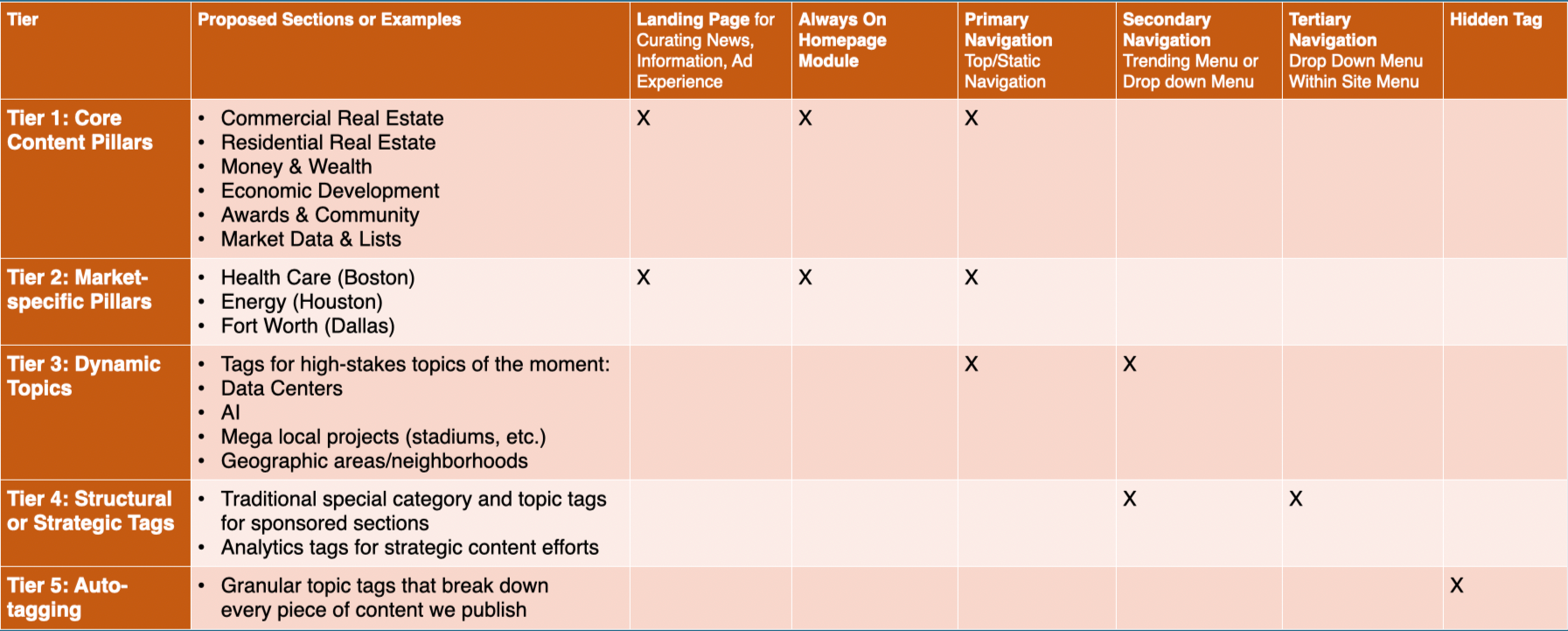
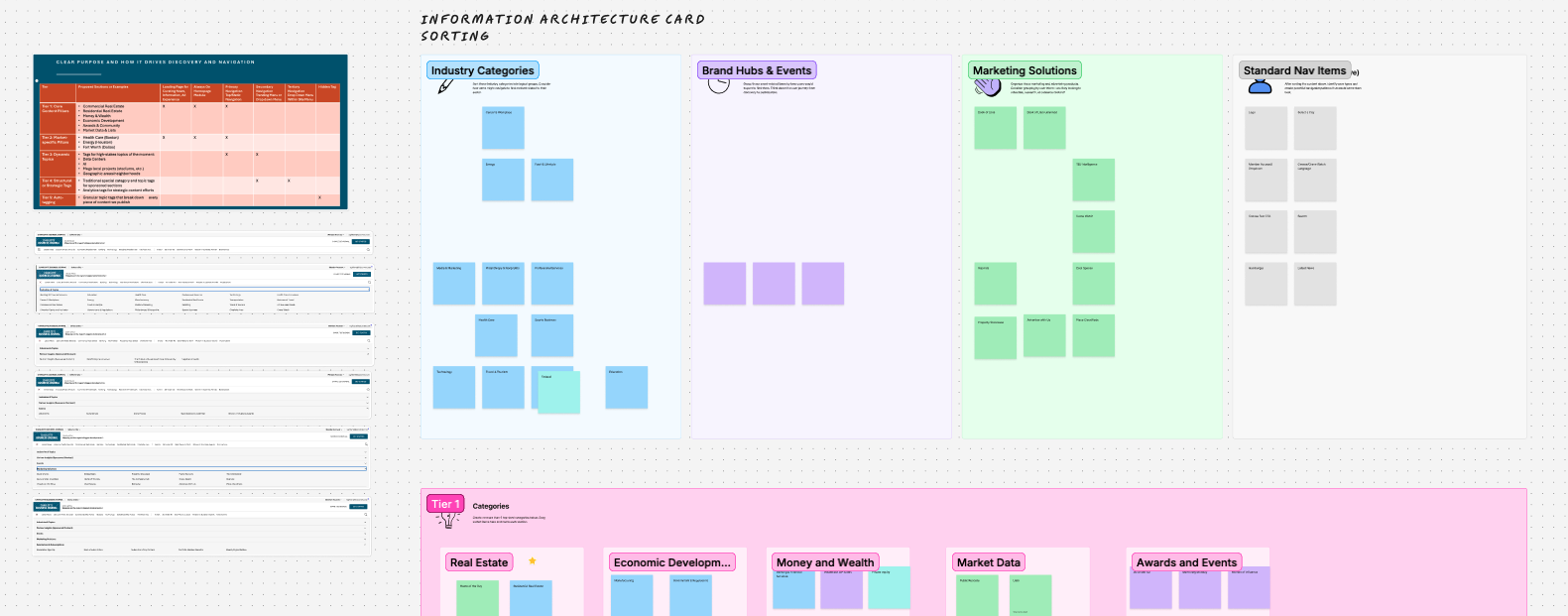
Partnering with two editorial leaders, I co-developed a new enterprise taxonomy framework designed to create consistency across our markets while preserving the flexibility needed for local coverage.
We established a structured approach to content classification, connecting core coverage areas with more specific topics and metadata. The goal was to create a shared foundation that could support editorial workflows, audience discovery, and advertising opportunities.
We presented the framework to leadership and secured approval, establishing a common direction for several interconnected product initiatives.
Step 2: Turning a framework into a product strategy
With an approved framework, the next challenge was translating it into the systems and experiences that audiences, editors, and advertisers actually use.
The work expanded into several connected initiatives:
Site navigation: Rethinking how audiences explore and discover editorial coverage.
Automated content tagging: Developing tools to support consistent classification and richer metadata.
Site-section experiences: Designing more engaging, structured destinations for editorial coverage.
Platform development: Coordinating the underlying technical changes needed to support the new taxonomy.
Working with editorial, product design, and development, I helped connect these efforts through shared planning, prioritization, and ongoing cross-functional collaboration.
Step 3: Bringing the strategy to life in Fort Worth
The launch of the Fort Worth Business Journal created an opportunity to put the new thinking into practice.
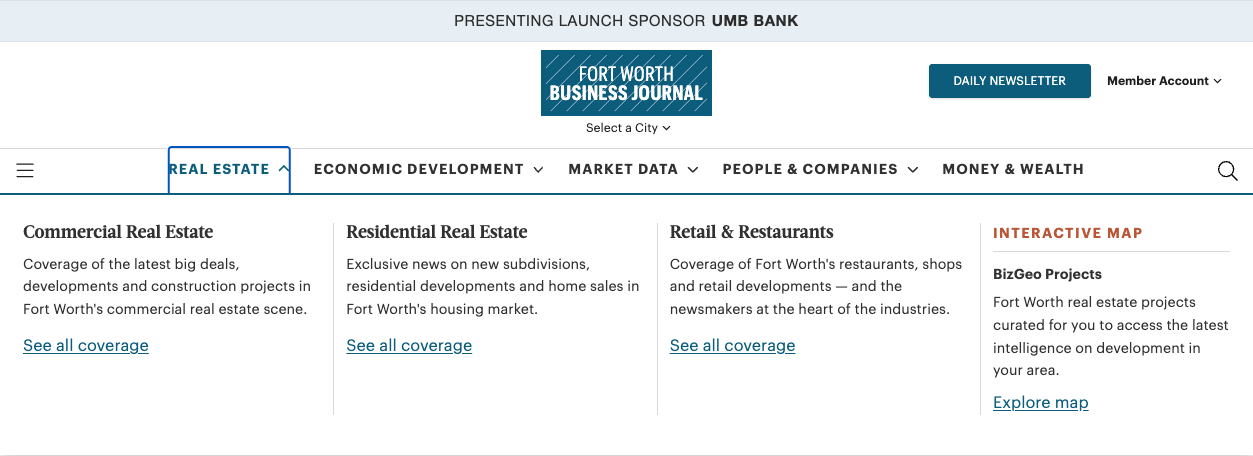
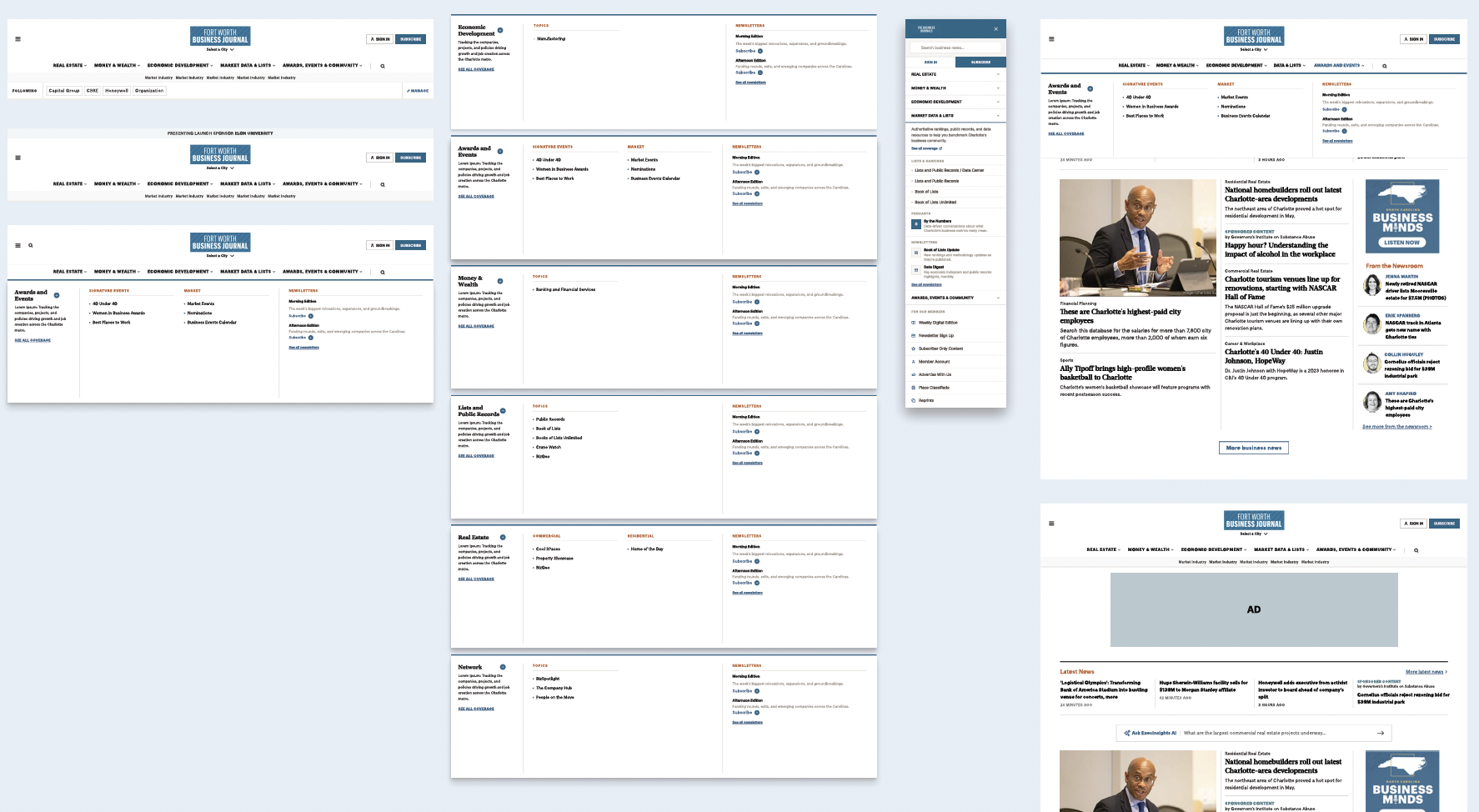
I led the navigation workstream in partnership with a product designer, exploring how the new taxonomy could translate into a more intuitive and discoverable site experience.
We evaluated different approaches to information architecture, balanced editorial priorities with audience needs, and developed a navigation model designed to make coverage easier to explore.
The resulting experience launched with the new market, giving us a live implementation to evaluate and learn from as we consider future improvements across our broader portfolio.
The impact: Building beyond a single project
What began as a commercial product challenge became a cross-functional initiative connecting advertising strategy, editorial structure, customer experience, and technology.
The work has delivered an approved enterprise taxonomy framework and a launched navigation experience, while related efforts in automated tagging, site-section design, and platform development continue to progress.
We're evaluating navigation engagement and content recirculation to inform future iterations.
More importantly, the initiative established a shared foundation for how we think about organizing, discovering, and monetizing content—creating opportunities for more connected and scalable digital experiences.